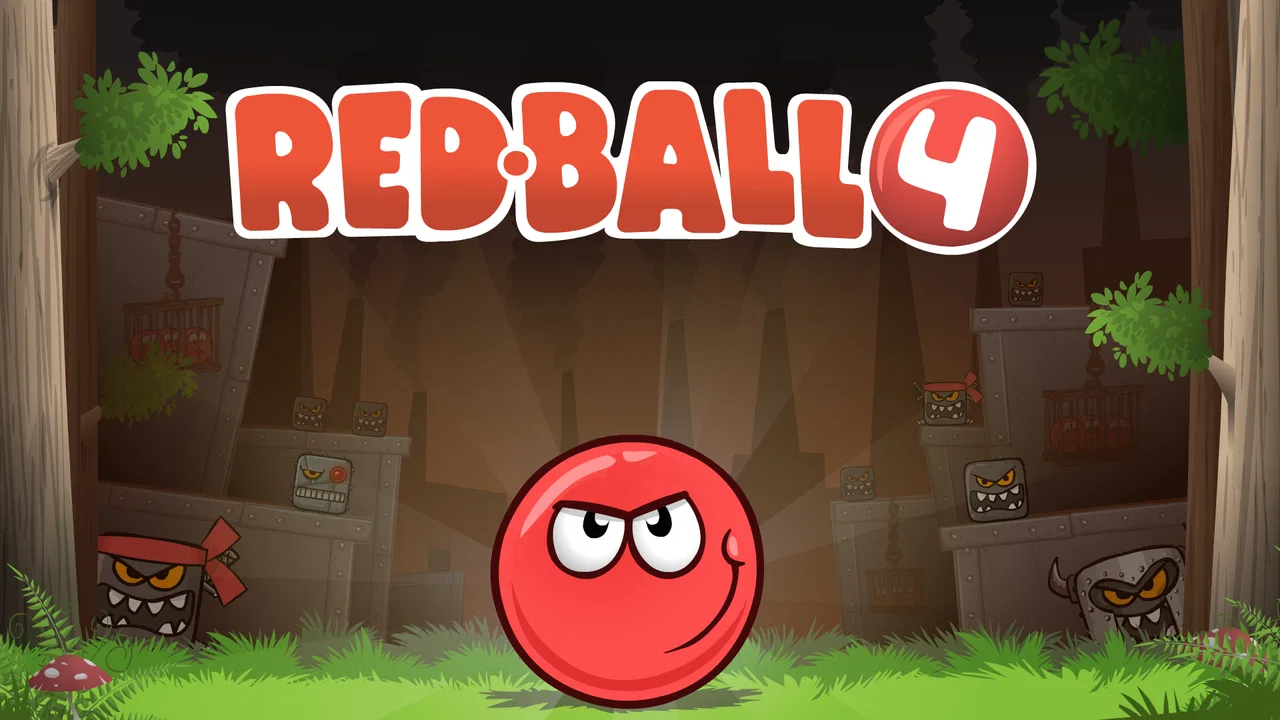
Red Ball 4
- 4.6
- Rating
- 100.00M
- Installs
- Free
- Price

 Analysis by App-foxy
I judge a platformer not only by whether its jumps feel satisfying, but also by how easy it is to understand what the game is asking me to do. Red Ball 4 makes its basic aim clear: I roll through side-scrolling stages, use jumps to cross hazards, and work out how to get past obstacles. The colorful scenes are readable at a glance, though the precision behind some movements can take practice. Its friendly look does not mean every section is effortless.
I see it as a good fit for short sessions rather than a game I need to play for an entire evening. It works when I have a few minutes to spare, and it also gives completion-minded players something to work toward across its 75 levels. The game is free to start, aimed at Everyone, and developed by FDG Entertainment GmbH & Co.KG. Its large audience is understandable: the basic idea is instantly readable, and the colorful style makes it suitable for younger players without making it completely uninteresting for adults.
How I play Red Ball 4 efficiently
I approach each stage with a small plan rather than trying to move quickly from the outset: first identify a safe landing, then adjust my run-up and jump to suit it. In the next section, I look at how clear scenes and simple navigation help—and where reading the action still takes attention.
You May Also Like

 Blood Strike: 2.5 Anniversary
Blood Strike’s Loadouts Turn Every Drop Into a Tactical Gamble
A close look at Blood Strike’s custom loadouts: how fast access to signature weapons reshapes its battle royale rhythm, rewards preparation, and narrows the gap between fights.

 Pandora - Music & Podcasts
Pandora’s Music Is Easy to Start, but Harder to Recover
Pandora’s strength is its low-effort path from a seed to a station. Its weak spot is how much confidence it asks you to place in connection, setup, and quiet recovery.

 8 Ball Pool
 Is Built on Rivalries, Rematches, and Routine
A close look at the rivalries, rematches, shared routines, and unanswered safety questions that turn a quick pool match into a persistent mobile community.

 Samsung Music
’s Quiet Strength Is Playing What You Already Own
Its reach comes less from spectacle than from dependable access to a personal library. That simplicity is both the app’s strongest retention engine and its ceiling.

 AccuWeather: Weather Radar
AccuWeather Review: A Quick, Clear Forecast for Everyday Decisions
For everyday plans, the best forecast is the one you can understand quickly. AccuWeather makes rain timing, radar, and local conditions easy to act on, with a few trade-offs.

 Hill Climb Racing
Why Hill Climb Racing Still Turns Crashes Into One More Run
A tiny car, a bumpy hill and one more upgrade: Hill Climb Racing keeps resurfacing because its simple chaos makes every near-miss feel personal.
More From Our News Desk
View All News


Readable scenes, straightforward navigation
My normal approach is to treat each stage as a sequence of small decisions instead of rushing from left to right. I first watch how the platforms are arranged, then move the ball in short bursts. That habit is especially useful near gaps, moving hazards, and narrow landing areas. Holding a direction for too long can turn a safe jump into an unnecessary fall, so I prefer brief inputs followed by a moment to see how the ball is moving.
The ball’s momentum is central to the experience. A jump is not only about pressing at the right time; it is also about arriving with the right horizontal speed. When I approach an obstacle too quickly, I often overshoot the landing spot. When I slow down too early, I may not clear the gap. This makes the game feel more deliberate than its playful appearance suggests.
The clean side-on view helps me judge what lies ahead, and the uncomplicated goal means I can spend my attention on movement rather than menus. That is useful for a player who prefers direct navigation, but visual clarity does not automatically make a tricky section easy. I still need to distinguish a safe landing from a hazardous one and notice how quickly the ball is moving.
A realistic everyday session
One useful way to play is during a short break when I want something more interactive than scrolling but do not want to commit to a long story or multiplayer match. I can complete part of a stage, close the game, and return later without needing to remember a complicated plot or a large inventory. That makes it a practical choice for casual play on a phone.
For example, if I have a few minutes while waiting for an appointment, I can focus on one difficult stretch instead of trying to make a long uninterrupted run. I use the first attempt to learn where the jump goes wrong, then try again with a smaller adjustment. If the interruption comes before I finish, the simple premise makes it easy to pick the game back up without reconstructing a story or plan.
For children, the straightforward goal is also helpful. There are no complicated character builds or dense menus to explain before the game becomes playable. An adult can show the movement controls, and the child can begin experimenting almost immediately. The more difficult sections may still require guidance, particularly when success depends on waiting rather than moving constantly.
Why repeating a level is worthwhile
Repeated attempts are not just a way to recover from failure. They let me separate problems into categories. If I keep missing the same jump, the issue is probably approach speed or release timing. If I reach the platform but hit a hazard afterward, I need to study the next section rather than keep changing the opening move. This small diagnostic habit makes progress feel earned.
I also find it useful to pause mentally before a difficult sequence, even when the game itself keeps the action simple. I look for the safest surface, identify where I want the ball to land, and then use the shortest input that should get me there. This is more reliable than reacting after the ball is already airborne.
One practical trade-off is that repetition rewards careful observation more than frantic persistence. When a jump fails, I try changing just one thing—my run-up, the moment I jump, or how soon I correct direction. Altering several inputs at once makes it harder to tell what helped. This method is especially valuable for younger players learning that a mistake can be information rather than a reason to rush the next try.
Comfort, age, and device checks
There is not much setup to manage, which is part of the appeal. Before playing seriously, I check that the current installation is running smoothly on my device and that the controls feel comfortable with the way I hold the phone. The game supports Android 7.0 and later, and the current version is 1.16.02. Those details matter most on older phones, where a player may want to confirm compatibility before expecting a smooth session.
I also pay attention to sound and notification interruptions. A platformer based on timing is easier to enjoy when outside alerts are not breaking concentration during a jump. If I am handing the phone to a child, I prefer to prepare the device first rather than interrupting play to change unrelated phone settings. This is not a special game feature, but it makes the experience noticeably less distracting.
The free entry point is convenient, though optional purchases are part of the package, with items priced from $4.99 to $6.99 each. I would keep that in mind before letting a child play without supervision. For my own use, I treat the game as a free arcade platformer first and decide later whether any purchase is genuinely useful. The core appeal comes from movement and level design, not from buying a shortcut.
Timing techniques for harder stretches
Once I know a stage, I stop treating every section as a fresh reaction test. I build a repeatable route. For example, I may use a short roll to line up with the first platform, release the direction briefly, and then make a controlled jump rather than holding the movement button throughout. Repeating the same sequence reduces random-looking mistakes and makes the ball’s momentum easier to predict.
Another helpful pattern is to avoid correcting too late. If the ball is already drifting past the intended landing point, a frantic reversal can create a second mistake. I get better results by making a smaller correction earlier, before the jump reaches its highest point. This is one of the clearest differences between a first attempt and a practiced run.
When a level includes several hazards close together, I divide it into checkpoints in my mind: approach, jump, landing, and exit. I do not mean formal save points; I mean manageable sections that help me identify exactly where a run failed. That approach is especially useful for players who become annoyed by repeating an entire sequence without knowing which movement caused the problem.
I also recommend resisting the urge to chase every collectible or side objective while learning a route. The safest line is usually the best teacher. After I can finish the stage consistently, I can experiment with a riskier path. This two-pass method is faster overall than trying to discover the route and achieve a flawless run at the same time.
Motor and sensory considerations
The controls are easy to grasp, but the game still depends on timely, deliberate input. I would not describe that as a demanding control scheme; the challenge is judging momentum and responding at the right moment. Players who find repeated directional corrections tiring, or who prefer a game that advances without close timing, may find the later sections less comfortable. A calm pace and short attempts help, but they cannot remove the precision the platforming asks for.
Sound and visual presentation can affect comfort differently from player to player. I find it useful to keep my surroundings quiet during a tricky section, since an alert or conversation can break concentration. Someone who prefers play without sound can still focus on the visible route, but should expect to rely on watching the action rather than treating it as a background activity. This is best enjoyed when the phone is held steadily and the screen is easy to see.
Where the game becomes demanding
The main limitation is that the simple controls do not remove the need for precision. Players expecting a completely relaxing experience may be surprised when later challenges punish hurried movement. The game looks friendly, but a missed jump still means repeating part of the section. That contrast is enjoyable for me, although it may frustrate someone who wants a purely effortless arcade toy.
Another limitation is variety of interaction. The central pleasure comes from rolling, jumping, bouncing, and navigating obstacles. If I want deep character development, extensive customization, competitive online play, or a large strategic system, this is not the right choice. A more complex platform adventure would offer greater long-term variety, while a minimalist endless runner might be better for someone who wants immediate score chasing with almost no level-by-level structure.
The game’s age rating of Everyone makes its presentation broadly accessible, but that does not mean every level is equally easy for every player. Younger children may understand the goal quickly and still need help with timing. Adults who are used to demanding platformers may find the early stages gentle, yet the compact format can still be satisfying when they try to improve their route.
How it compares with other arcade choices
Compared with an endless runner, this game gives me more control over the challenge. I am learning fixed stages rather than reacting to an endlessly changing stream, so practice has a clearer payoff. Compared with a physics sandbox, it is more structured and less open-ended: I am not freely experimenting with a large set of tools, but I am solving the movement problem placed in front of me.
It also differs from a traditional long-form platform adventure. There is less emphasis on exploration, story, and character progression, but that makes the game easier to pick up for a short session. I would choose it when I want a clean arcade loop and choose a larger adventure when I want a world that develops over many hours.
The audience response reflects that broad accessibility. Red Ball 4 holds a 4.6 average from around 3.5 million ratings, with roughly 69 thousand written reviews and over 100 million installs. I do not take popularity as proof that every player will enjoy it, but it does show how effectively the basic format works across a wide range of phones and players.
Who is likely to enjoy it
I would recommend it to anyone who likes short platforming challenges, colorful arcade presentation, and the satisfaction of improving through repetition. It is particularly suitable for players who want something understandable without a tutorial-heavy introduction. Families may appreciate the accessible presentation, while experienced players can still find interest in refining jumps and reducing careless movement.
I would skip it if my priority were a deep story, online competition, extensive customization, or a game that changes dramatically from one session to the next. I would also be cautious if I disliked repeating sections after a missed jump. The controls are simple, but the game still asks for patience, and no setting can remove that central demand without changing what makes the platforming work.
My verdict after learning its habits
Red Ball 4 succeeds because it does not overcomplicate its central idea. I roll, jump, observe, adjust, and try again. The strongest way to enjoy it is to turn that loop into a habit: learn the safe route first, use shorter inputs near hazards, and only chase more ambitious goals after the basic movement feels predictable.
There are limits to the formula, especially for players who need constant novelty or a richer progression system. Still, as a free arcade game from FDG Entertainment GmbH & Co.KG, it offers a polished and approachable way to spend short bursts of time. The combination of friendly presentation and increasingly careful timing gives it more substance than its one-button simplicity might suggest.
My final recommendation is positive, with one qualification: approach it as a compact platforming challenge rather than an enormous adventure. If that sounds appealing, Red Ball 4 is easy to start, simple to understand, and rewarding when I replace rushed reactions with repeatable movement. Its best moments come from mastering a jump that looked trivial at first, then carrying that confidence into the next stage.
FAQs for Red Ball 4
01What is the objective of Red Ball 4?
Red Ball 4 is a physics-based platformer where players guide a red ball through various levels, overcoming obstacles and enemies. The main objective is to stop the evil squares from turning the world into a square shape, by solving puzzles and defeating bosses across different stages.
02Is Red Ball 4 suitable for children?
Yes, Red Ball 4 is suitable for children. It features simple controls, colorful graphics, and non-violent gameplay. The game encourages problem-solving skills and hand-eye coordination, making it an enjoyable and educational experience for younger audiences, while still entertaining for players of all ages.
03How many levels does Red Ball 4 have?
Red Ball 4 consists of 75 levels spread across different chapters, each with unique challenges and environments. Players need to navigate through forests, factories, and beyond, facing increasingly difficult puzzles and enemies. The variety keeps the gameplay fresh and engaging throughout the adventure.
04Do I need an internet connection to play Red Ball 4?
No, an internet connection is not required to play Red Ball 4. The game can be enjoyed offline, making it perfect for playing on the go without worrying about connectivity. However, an internet connection may be needed for initial download and updates, or to access certain online features.
05Are there in-app purchases in Red Ball 4?
Yes, Red Ball 4 includes in-app purchases. While the game is free to download, players can choose to purchase additional lives or remove ads to enhance their experience. These purchases are optional and not necessary to complete the game, allowing players to enjoy it fully without spending money.
Pros
- Engaging and addictive gameplay.
- Simple controls for easy play.
- Vibrant and appealing graphics.
- Multiple levels with increasing challenges.
- Fun for all ages.
Cons
- Contains ads that can interrupt play.
- Limited free levels without purchase.
- Requires internet for some features.
- Occasional lag on older devices.
- Repetitive background music.

Red Ball 4
Gallery